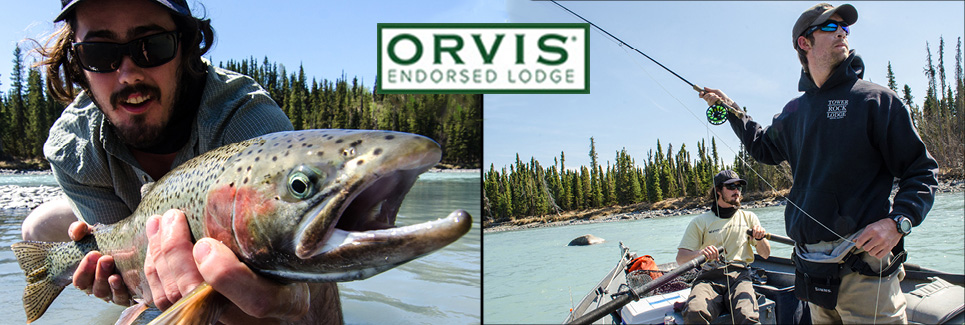
The fishing guides at Tower Rock Lodges are experts at fishing for Kings in Alaska. Here is their insight:
"There are really only two consistent ways to put these fish on the hook: back-trolling and back-bouncing. Back-trolling consists of sending out diving baits (plugs, salmon eggs) and holding the boat in the current so that the bait dives down against the river's flow. The boat is positioned above the hole then slowly slides down until the gear gets into the money spot. Wait until the rod buries and the line peels before striking the fish.
Drifting (back-bouncing) is totally different. This involves attaching a fair amount of weight to your line and sending a freshly cured (our own secret brine) chunk of King roe, combined with a large Spin N' Glow down to the river's gravel bottom where it drifts in unison with the river current until an unusual bounce conveys that the King Salmon is bumping the bait. When the fish bites, lower the rod and then HAMMER the fish! It is the method most widely used by our boat guides and hangs a lot of huge fish."
 Fishing Regulations
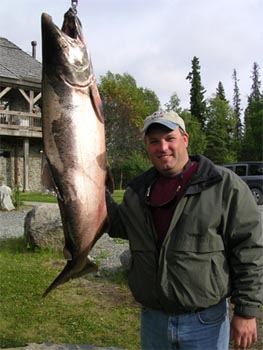
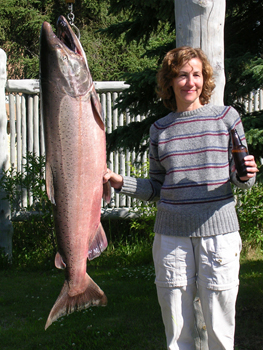
The first run of King Salmon appears by early May when the Kenai River is low and very clear. The low level of the river during this period tends to concentrate the fish in deep holes in the Tower Rock Lodge area, and each tide will bring another group of fish into the river. The river's early King Salmon average between 30 and 40 pounds with occasional catches of 60 or 70 pound fish. The current world record (97.4 Pounder) was taken May 17th, not a nine iron up river from TRL.
With fewer anglers the June fishery experience can be relaxing and highly rewarding. The tranquility of the river during May and June provides our anglers the chance to view wildlife such as moose, caribou, bald eagles and waterfowl. Current ADF&G June run daily fish counts are building and remains strong until the 2nd run Kings begins to arrive at the end of June.
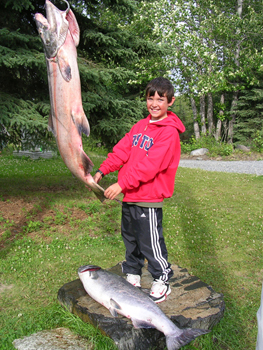
The late run begins on July 1 averages about 40,000 fish. Lower River spawners below the Soldotna Bridge will take eggs or a "pork chop" which is a quick fish with a sardine wrap. Use a #40 main line, #80 leaders, #20 Jet planer and back troll. Wait until the rod totally buries, then double strike with no thumbs and reel like a badger out of hell.
Because the second run of Kenai Kings occurs during the middle of summer when Alaska can experience temps into the 70's, it is the most popular with anglers. Due to the spectacular weather and fishing, there can be more anglers so competition increases. This fishery allows the use of bait beginning July 1 so we use a variety of techniques and tackle to catch these monsters. Artificial lures, laced with sardine or salmon roe, back-trolled, back-bounced, or drifted are the methods our guides use. This run actually begins to arrive during the last week of June and continues to the end of July when the King season closes. Numbers of Kings can run to several thousand per day during the peak in mid July. Trophy hunters should remember there are plenty of wallhangers taken from both runs.
A pretty little glacier-fed Drift Boat River, 15 miles SSW of Tower Rock, the Kasilof is 22 miles long and flows from Tustamina Lake to the Cook Inlet. About the width of the road in front of your house, the Kasilof River has a remarkable King Run that has become a favorite to many of our guests. It’s the perfect size for hooking Kings with a fly rod. Due to the shallow, rocky nature of the river it is navigated by our highly skilled guides in drift boats. It is a peaceful adventure down a pristine river filled with lots of fishing action.
 Early Run
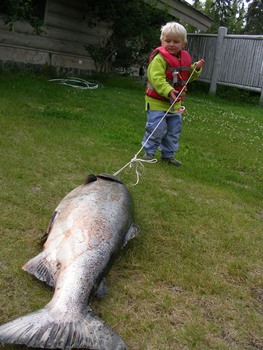
This King salmon run begins at the same time as the early King run on the Kenai River. From mid-May through June anglers are most successful fishing from our guided drift boats. Bait is also allowed in this fishery. Multiple hook-ups are frequent. Kids really enjoy it because most days see enough action to keep them thoroughly focused on catching fish. This is an awesome drift boat river. Outstanding for Fly Rod Anglers who enjoy the challenge of trying to hook Kings and Sockeyes on fly rods.
 Same as above except:
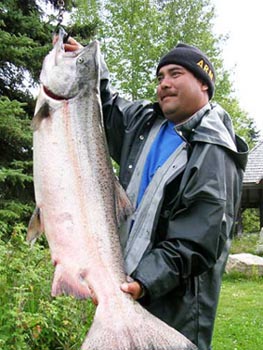
The Kasilof has an entirely wild return of late run native Kings. This late run of Kings in the Kasilof features big, hard fighting fish often exceeding 40 pounds. Fighting these big Kings with no motor in extremely fast current is a very challenging and memorable experience.
The Kasilof River is tidally affected. We need an out going tide to get down river to the haul out. Start and stop times for trips on the Kasilof fluctuate daily as they are determined by the tide coming in and going out. Beginning at Tustumena Lake the Kasilof flows 22 miles NNW to the Cook Inlet near the town of Kasilof which was an original Russian trading Post. The early run on the Kenai also coincides with an early run of Kasilof fish both hatchery and wild. Only 4 people are allowed in each drift boat. Fishing the Kasilof is a different from fishing the Kenai because motors are not allowed on this river during salmon season, making a trip down the Kasilof a very quiet yet exciting journey. Early run Kasilof Kings average 20 pounds and late run fish can grow to over 50 pounds. It isn't unusual to catch and release a steelhead or a few Dolly Varden during a drift down the Kasilof and of course the Reds and Silvers are plentiful in the correct season.
Tower Rock Lodge an Orvis Endorsed Fly Fishing Lodge, Located in Kenai Alaska. Offering the best Alaska Fishing and Lodging in all of Alaska